
Last updated November 17, 2026
 Home additions & ADU
 Kitchen remodeling
 Bathroom remodeling
 Roofing
 Windows & doors
 Driveway & pavers
 Fence
Free written scope consultation - allowances, timeline, and change-order rules on paper before a single trade is scheduled
Construction Warning Signs: An Allen Homeowner’s Reference Guide
Most warning-sign checklists tell you what you already worry about: a missing shingle, a cracked tile, a door that sticks. This guide is different. It focuses on the early indicators that Allen homeowners routinely dismiss as cosmetic, the small hairline crack, the faint stain in the attic, the hairline gap at the fascia board, that are actually the first readable signal of a larger system failure. In a town where the soil and the summer sun both work on a house, those small signs matter more than the obvious ones. What follows is a self-triage guide: how to read crack patterns, what to look for in your own attic, how to spot bad flashing before water makes it obvious, and which exterior conditions can void a material warranty.
Quick Answer
In Allen homes, the warning signs that matter most are not the dramatic ones. They’re the hairline cracks in brick mortar, the drywall seams that stay open after you patch them, the dark bands at the attic roof deck, and the gaps where the fascia meets the soffit. Each is a readable signal of movement, moisture, or heat working on the building envelope. Catch them early and most are modest repairs; ignore them for a couple of seasons and the same issue turns into structural or moisture damage.
Styles & brands we work with
- Kitchen remodeling
- Bathroom remodeling
- Home additions & ADU
- Roofing
- Windows & doors
- Driveway & pavers
- Fence
Table of Contents
- Reading Cracks: Foundation Movement vs. Normal Thermal Movement
- What Your Attic Tells You Before a Roofer Does
- Gutter and Fascia: The Predictable Path to Soffit Failure
- Flashing Problems Around Bay Windows, Chimney Chases, and Wall Intersections
- Five Exterior Conditions That Can Void Your Material Warranty
- Interior Warning Signs in Kitchens and Bathrooms
- Exterior Signs That Justify a Full-Scope Inspection
- What Documentation to Keep for Every Renovation
Reading Cracks: Foundation Movement vs. Normal Thermal Movement
Allen sits on Blackland Prairie clay, and that clay is the single biggest factor in how a house here ages. The clay swells when it’s wet and shrinks hard in the dry months, and a foundation that isn’t consistently supported from below will move. Every house moves a little. The question is not whether your home has cracks; it’s whether those cracks are the normal give of a building flexing through the seasons, or the early stage of a foundation problem that’s beginning to compromise the brick veneer tie system.
The pattern of the crack tells you which one you’re looking at.
Cracks that are usually cosmetic
- Hairline cracks along drywall seams that reappear after patch and repaint but stay under a coin’s width
- Diagonal cracks at the corners of windows and doors in drywall only, with no matching brick crack on the exterior at the same location
- Vertical mortar cracks of a hairline width in one isolated spot of brick, with no corresponding interior crack
- Stair-step cracks in a decorative masonry wall (like a garden wall or a low planter wall) that moves separately from the house
Cracks worth triaging in person
- A diagonal crack in brick that steps along the mortar joint and continues past the corner of a window or door opening
- A drywall crack on the interior at the same corner where the exterior brick crack shows, even a hairline one. Paired cracks are the readable one to take seriously.
- A crack that is wider at the top than the bottom, or wider at one end of the same crack
- Any crack in brick mortar wide enough to slip a credit card edge into
The trick with exterior brick is that the cracks don’t always come back. The mortar joint can seal visually in the wet season and widen again in the dry. That cycle alone is useful information: a crack that opens and closes through the year is showing the house reacting to soil movement. If the crack is stable, hairline, and there’s no corresponding interior crack, it’s usually a maintenance item, not a structural alarm. Paired interior and exterior cracks are the pattern that needs a real inspection.
When the answer is a crack in the brick veneer tie system or a shifting foundation, the fix depends on the cause. If the cause is soil drainage, grading, or gutters discharging too close to the slab, the answer can be as simple as correcting the drainage before any repair to the brick. In our experience, correcting drainage first and then re-evaluating the crack after a full wet and dry cycle is often more informative than repairing the crack immediately. If you do need to move into the structural repair phase, our team at Whitman Contractors can walk through the scope so you understand what’s being addressed and why.
What Your Attic Tells You Before a Roofer Does
Most Allen homeowners only look at the roof from the driveway, which is the worst angle. The roof deck is where the readable information is, and you can check it yourself with a flashlight before calling anyone. That doesn’t mean inspecting the whole roof; it means knowing what to look for when you do get up there, or when you ask a technician to describe what they see.
Here’s the self-check of the interior attic, in the order that gives the most useful information:
- Look along the underside of the roof deck for dark bands. Shadowy stripes running across the decking from the ridge down toward the eave usually point to heat and moisture concentrating in that zone. Broad, uniform darkening of the deck is a different story than a single water stain. A single stain with a defined edge and a visible drip trail is a water entry point.
- Check the underside of decking in the attic for hail bruising. Hail damage from above often shows as soft, bruised spots on the decking where the granules have been pushed into the mat. Look for craters, dimpling, or spots where the underside of the deck looks dented. This is often invisible from the outside once the shingles have flattened back out.
- Look at the rafters and the tops of the top plates. Streaks of discoloration on the rafters or where the rafters meet the top plate tell you water has been tracking along the wood. This is a warning sign you can see from inside, often before it reaches the ceiling below.
- Check the insulation at the eaves. Compressed, matted, or dark-stained insulation near the perimeter usually means water is getting in at the roof-to-wall intersection or the drip edge and travelling inward.
- Smell the attic, and check for rust on any metal fasteners. A persistent musty smell or rust on nails holding the decking are both slow signals that moisture has been collecting for a while, not just in the last storm.
If a roofer gives you a report based on the driveway view only and hasn’t looked from the inside, ask them to. A roofing system is only as good as the deck under it, and the deck is what you can read yourself. Our team has worked across multiple roofing systems from manufacturers including IKO and Boral, and the deck inspection is where every real conversation about a repair should start. The roof itself will tell you a lot, but the deck under it is the one that keeps secrets the longest.
Gutter and Fascia: The Predictable Path to Soffit Failure
Fascia and soffit are the parts of your house nobody thinks about until they fail, and in Allen they fail in a predictable sequence. The fascia board is the vertical board at the edge of the roof; the soffit is the underside panel that closes off the gap between the fascia and the wall. Damage starting at one end of the fascia almost always reaches the soffit inside one to two seasons if it isn’t addressed.
The sequence looks like this:
- Stage one: The fascia board shows paint peeling in a concentrated strip, usually near a gutter end or at the corner of the house. This is the first sign, and it’s almost always missed because it reads as a paint problem.
- Stage two: The gutter hangers begin to pull away from the fascia, or the gutter visibly sags along a run. The gutter is still holding water, but the wood behind it is losing hold.
- Stage three: A soft spot in the fascia at the point where the hanger or the gutter end cap attaches. Poke it gently; if a screwdriver tip sinks easily, the wood is compromised.
- Stage four: The soffit begins to droop or shows staining along its bottom edge, and you may see daylight through the gap between the soffit panel and the fascia board.
- Stage five: Water inside the roof overhang line, or visible separation of the fascia from the rafter tail.
The reason this matters so much in Allen is the way the summer sun and the spring storms work together. UV exposure dries out and opens the paint film on fascia; a heavy rain then drives into the opened grain. Wood that gets wet and then baked dry, cycle after cycle, holds up far worse than wood that stays wet or dry. A fascia board that looks structurally fine can be losing its grip on nails well before it looks bad.
Once the soffit begins to fail, water reaches the wall cavity and travels down inside rather than off the roof, which is why this sequence is worth interrupting at stage two. If you notice sagging gutters or a soft fascia at a corner, that’s a drain and fascia conversation worth having with a contractor before the soffit is involved.
Flashing Problems Around Bay Windows, Chimney Chases, and Wall Intersections
Most leaks that homeowner’s insurance companies investigate are not roof failures. They’re flashing failures, and flashing is the least visible part of a roofing system. Flashings are the metal (or membrane) details that direct water around anything that interrupts the roof plane: bay window roofs, chimney chases, dormers, and the intersections where a roof meets a vertical wall. Done correctly, they’re covered or sealed and invisible. Done incorrectly, they look fine at the surface and only announce themselves when water finds a way past the detail.
Here’s what to look for around the flashing, in the order that surfaces it most often:
- Check the bay window roof-to-wall junction. The roof over a bay window is small, but it’s a full roof in miniature, and the flashing where it meets the main wall is the most common failure point on an Allen home with a front or side bay. Look for the flashing being nailed through its face rather than being concealed and stepped. Water will find every fastener.
- Look at the chimney chase at the point it meets the roof plane. Step flashing should run horizontally along the base of the chase with counter-flashing set into the chase wall and lapped over the step flashing below it. If you can see caulk where flashing should be, or if the counter-flashing is spot-caulked at the top edge, the detail is compromised.
- Check the sidewall intersection on the second story. Where a sloped roof meets a vertical wall above it, a long run of step flashing should step one shingle course at a time. If it looks like one long flat piece of metal butted against the wall, that’s a job to inspect.
- Watch for caulk over caulk around any roof penetration. Skylights, vents, and plumbing stacks get caulked by one contractor, then a second, then a third. A tower of caulk is a readable sign that the flashing underneath is not doing its job and hasn’t been for a while.
- Look for the drip edge disappearing under the gutter. If the drip edge is short of the gutter, water can track back under it and around the fascia, which is one of the most common paths to interior moisture that gets blamed on the roof.
In our experience, the flashing details are the part of the job most affected by weather-driven cycling in Allen, because sun and rain work metal and sealant differently than they work shingles. Metal expands and contracts more than the roofing materials around it, and seams that were tight at installation loosen through the seasons. That’s why a flashing detail that’s correct at installation and then inspected in year two is worth more than a detail that looks clean at year one and is never checked again.
Five Exterior Conditions That Can Void Your Material Warranty
This is the section most homeowners never hear about until it’s too late. Manufacturer warranties for roofing, siding, and windows are conditional. The material is covered if it’s installed to the manufacturer’s published requirements and the building envelope is functioning properly. When one of the conditions below is present, a manufacturer can deny a claim even when the material genuinely failed. Those conditions are:
- Improper attic ventilation. Roof surfaces from IKO, Atlas, or Tamko are warranted for the performance of the material in a properly vented roof assembly. A home with a blocked soffit vent run or a missing ridge vent will show premature shingle aging from the inside out, and the failure gets attributed to the assembly, not the product. Verify the intake and exhaust ventilation are correctly balanced before the roof goes down.
- Flashings at penetrations installed with surface caulk only. Flashings must be installed per the manufacturer’s detail rather than caulked into place. A shingle or metal system that’s been sealed over caulk from a previous repair is not a warrantable installation.
- Gutter systems without the specified drip edge. Roofing manufacturers warrant the system with the drip edge in place. If the drip edge has been removed, cut short, or is installed over a fascia that’s already failing, the manufacturer can decline a claim on water-related damage.
- Ponding or standing water on the roof assembly. For low-slope portfolios, standing water is a known warranty exclusion. If a low-slope roof is not draining correctly, the ponding itself is a red flag for warranty purposes.
- Unpermitted structural changes to the roof or exterior envelope. This is the big one for Allen. A previous owner who replaced the roof, added a dormer, or cut a hole for a skylight without pulling the permit leaves the next owner with a warranty that may not be enforceable, because the manufacturer’s warranty attaches to the installed system, not the material alone.
What documentation to keep
Whether you’re the original owner or a buyer doing a pre-purchase inspection, the paperwork matters as much as the work. Keep these together in one folder:
- The written estimate and final invoice, with the material and color specified
- The manufacturer’s model and lot number from the packaging
- A copy of the permit application and the final inspection sign-off
- Photographs of the flashing details prior to the final shingle course going on
- The date of installation, and the name of the installing contractor
If any of these are missing, ask the installer to produce them. A roofing system that’s correctly documented is one you can defend with the manufacturer years later. A roofing system that isn’t leaves you with a repair bill when a warranty claim would have covered it.
Interior Warning Signs in Kitchens and Bathrooms
Most interior renovation problems also start small. A bathroom that’s gutted and rebuilt correctly uses the right backer board and waterproofing system under tile; a bathroom that’s been redone cheaply shows its first warning signs within a few years. The signs to look for before you commit to a remodel or a repair:
- Grout that darkens and then stays dark for more than a few days after cleaning. That usually points to moisture getting under the tile rather than surface dirt.
- Soft spots in a kitchen floor near the dishwasher or the sink cabinet, or a subfloor that flexes slightly when you step on it. This often means a slow leak has been running under the floor covering for a while.
- Bubbling paint on the wall behind the kitchen backsplash, or a strip of paint peeling at counter height. That’s typically the back edge of a counter leaking past the caulk joint against the wall.
- A toilet that rocks slightly after years of stable installation, or a ring of discoloration on the floor around the base. The wax ring has likely failed, and water is going into the subfloor.
- Bathroom fan that struggles to clear the mirror after a shower, which points to a worn fan or a duct that’s been disconnected in the attic.
Catching these before the remodel phase matters because the fix can be small: replacing a wax ring or re-caulking a counter joint is inexpensive relative to a gut renovation. If a bathroom or kitchen is going to be rebuilt anyway, these signs tell you how far back the renovation has to go to correct the moisture path rather than just cover it. Our team handles bathroom remodeling with proper tile backer and waterproofing systems so the warning signs of a previous poor installation aren’t repeated. Source materials from a supplier who backs up the spec, and you’ll spend fewer evenings looking at dark grout lines.
Exterior Signs That Justify a Full-Scope Inspection
Most of this guide is about reading one system at a time. But some warning signs are worth a broader look because they involve the whole envelope. If any of the following conditions is present at your Allen home, it’s worth a full-scope inspection rather than a stopgap repair:
- Multiple hairline brick cracks across the same facade that all run in roughly the same direction, which usually points to movement of a whole wall rather than a single installation issue.
- Roof and gutter issues appearing at the same time as interior ceiling stains, which suggests the failure is at the flashing and drip edge, not isolated to one assembly.
- Older windows that visibly leak at the corners of the frame, or windows where you can feel air coming through the joint between the frame and the wall. That’s a wall-and-window integration problem, not just a window problem.
- A paver driveway or walkway that has begun to heave at the house line, which points to runoff travelling toward the foundation rather than away from it.
- Fence posts that have pulled out of line near a corner where a roof drains close to the fence. That’s a sign of the drainage pattern on the whole side of the property, not just the fence.
When the trigger points to more than one system, ordering a full-scope inspection is worth it. The advantage of using a single contractor across the whole envelope is that the paving, fencing, roofing, and windows get looked at as one picture rather than four different trade visits. If you’re going to spend the money on a package, put it where it does the most good. Our team at windows and doors works alongside the roofing and hardscape side of the business so the wall assembly, the window, and the roof-to-wall transition are looked at together. And when a full addition or ADU is part of the plan, that same whole-house view applies. A home additions & ADU project that ties into an existing roofline is where flashing mistakes get made and where they get caught if the whole crew is on the same job.
It’s also where a fresh driveway & pavers installation can actually solve a warning sign rather than just improving the curb view. If the grade is wrong and water is pooling at the house, re-paving the drive with a proper slope is a repair, not a cosmetic upgrade. Likewise for fence installation, where a leaning fence is often the readable sign of a drainage path rather than a poorly set post. This is the difference between a single-trade visit and a whole-scope contractor: the fix comes from having the right trades on the same project, so the grade, the fence line, the drain, and the wall all get solved at once.
Common Mistakes to Avoid
- Patching cracks before reading them. A homeowner who seals a diagonal brick crack and paints over the interior crack has erased the readable data that a foundation inspector needs. Photograph both before you repair, and note the date. A photo taken a full year apart that shows the crack at two widths is worth more than any patch.
- Judging roof health from the driveway only. Shingle surface damage reads very differently from the driveway than from the attic. Hail or heat damage that isn’t visible at the surface often leaves dents and staining on the deck that a driveway view will never show.
- Caulking over flashing instead of addressing the flashing. Caulk is a short-term cover, not a fix. In a climate where metal and sealant expand and contract through the seasons, caulk loses adhesion fast and the water intrusion returns. Fix the flashing detail, not the caulk line.
- Replacing a fascia board without checking the soffit behind it. If the soffit is soft, the fascia will fail again. Fix them as one assembly, not as two separate boards.
- Assuming the manufacturer’s warranty automatically covers you. Warranties are conditional on correct installation, proper ventilation, and the manufacturer’s own detail requirements. Keep documentation from day one and verify the install meets the spec.
- Letting a previous owner’s unpermitted work slide. In Allen, where plenty of homes have been touched by a previous owner, unpermitted work from a prior remodel can void a warranty and complicate a future sale. Check the permit history before you buy, or before you warrant any claim.
- Waiting for water to make the flashing problem obvious. The time to look at the flashing is before you’re looking at a ceiling stain. Water intrusion is a slow, hidden process, and interior staining appears only after the moisture has already done damage.
See the difference
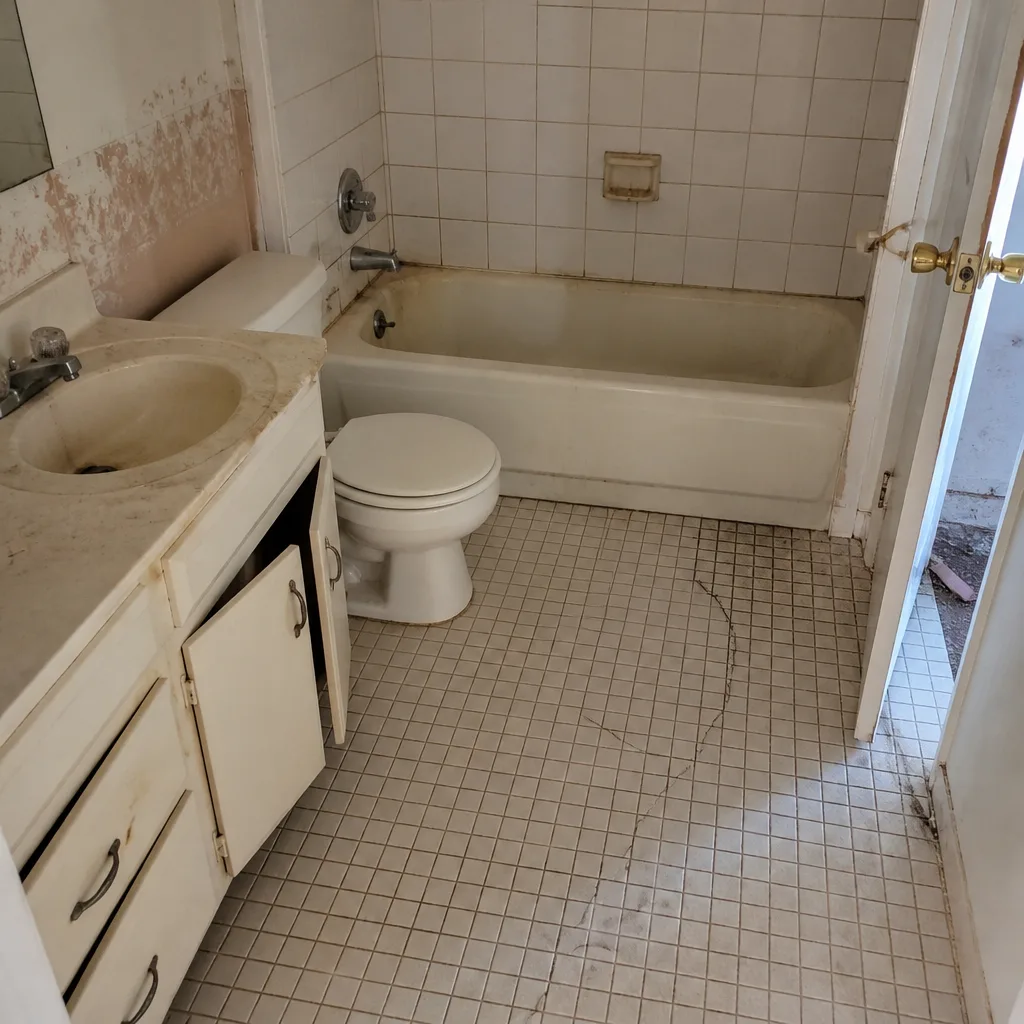 Before
 After
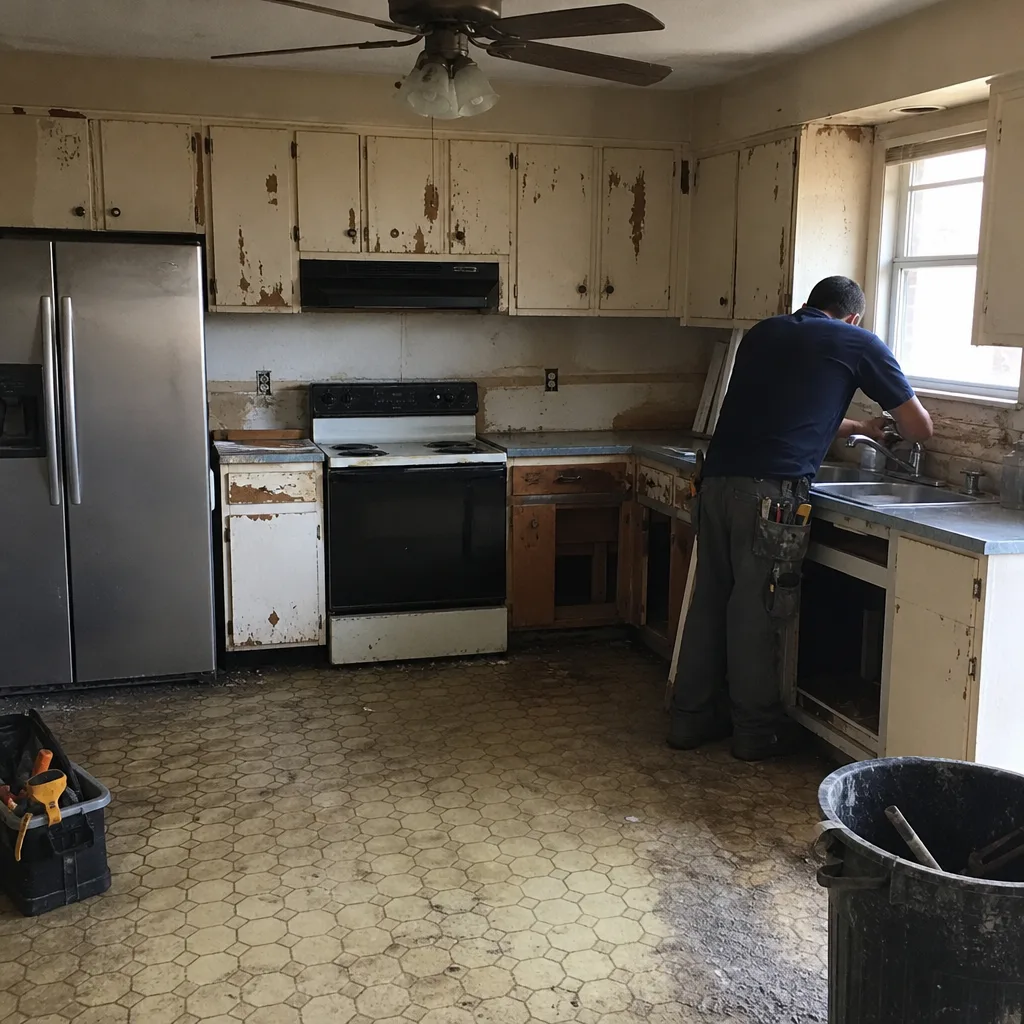 Before
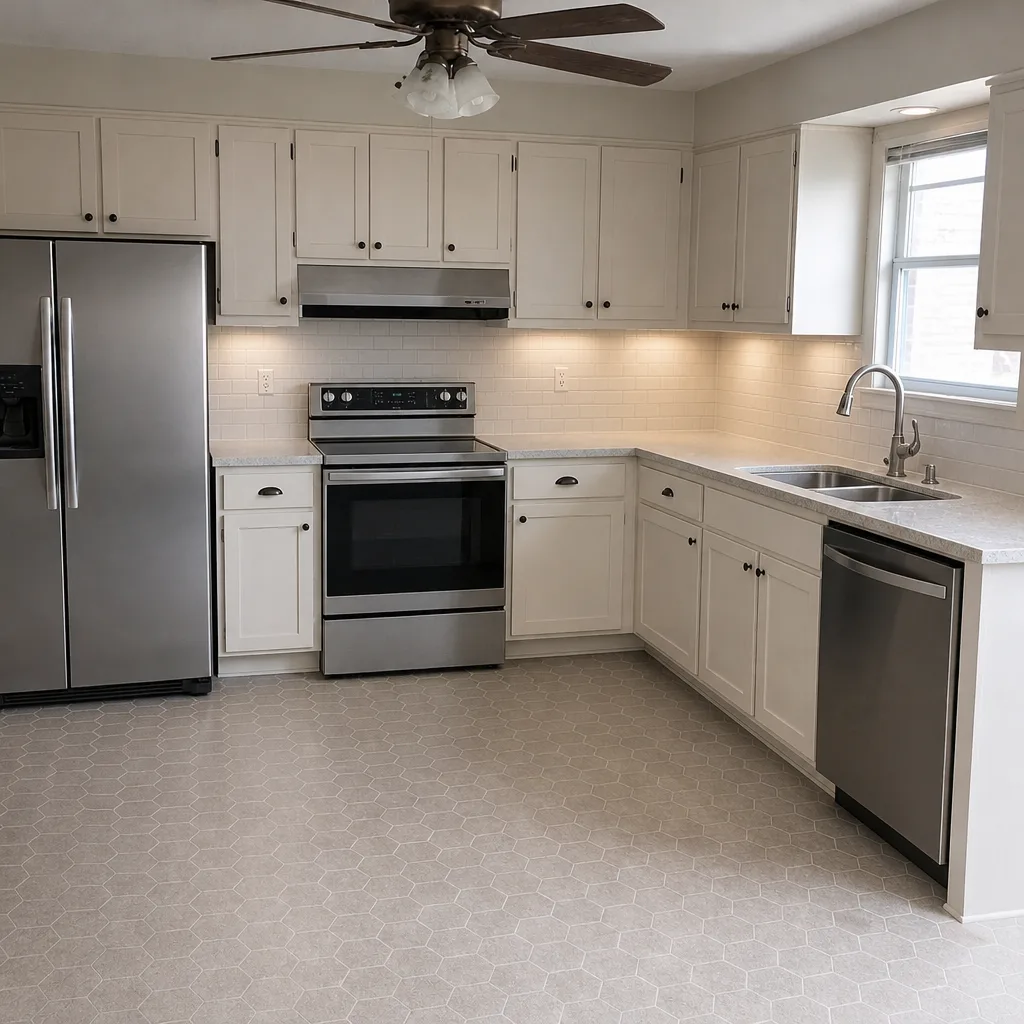 After
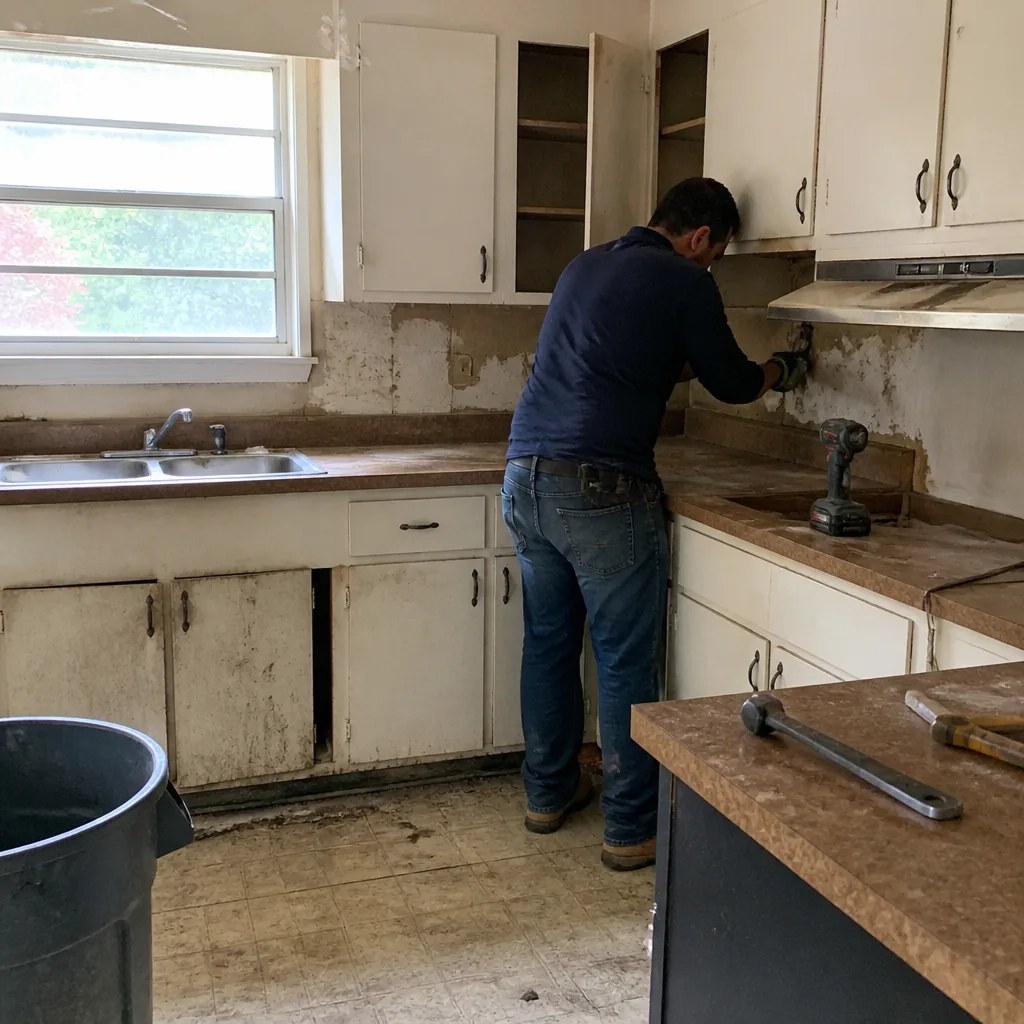 Before
 After
When to Call a Professional
Some warning signs are worth watching over a season. Others need a professional’s eyes on the next visit. Call when you see any of the following: a diagonal brick crack that continues past a window or door corner, a matching interior and exterior crack at the same location, dark decking or dented decking visible in the attic, a soft fascia board at a corner, flashing that’s been caulked repeatedly, or a window that leaks at the frame corner during a hard rain. Call early, document with photographs, and don’t repair the visible surface until a professional has seen it. Whitman Contractors offers free estimates in Allen – call (844) 320-7445 to schedule a whole-house inspection across roofing, windows, paving, and fencing. We answer 24/7. Fast dispatch from 7am to 7pm, Sunday through Friday.
Frequently Asked Questions
A diagonal brick crack that continues past the corner of a window or door, especially when there’s a matching interior drywall crack at the same location, is the pattern that points to foundation movement. A single isolated hairline vertical crack in the brick with no matching interior crack is usually the normal give of a house on the Blackland Prairie clay. Take a photo with a tape or coin in frame for scale, date it, and take another in the dry season. If the crack opens wider in dry weather, its response to soil movement is confirmed.
Look at the underside of the roof deck for dark bands, craters, or bruised spots, then look at the rafters and top plates for rust streaks or discoloration, and finally check the insulation at the eaves for compression or staining. If the deck is dented from above or shows a defined water stain, that’s a roof-deck conversation before a shingle conversation. A roofer who hasn’t looked at the deck from inside is working from half the picture.
Hail bruising on the deck shows as craters or dimpling on the underside of the plywood or OSB, along with possible granule staining where shingles have been impacted. The shingle surface may look fine from the driveway after the sun has flattened it back out. If you’re worried about hail, the attic view is the one that can confirm it.
Yes, if it’s not corrected. Manufacturer warranties are conditional on installation to the published details, and flashing is one of the key detail areas. Caulk over the flashing instead of correct step-and-counter-flashing is a documented reason a manufacturer can decline a claim. Keep photos of the flashing details before the shingle course goes down, and verify the install meets the manufacturer’s spec.
Usually within one to two seasons in Allen, sometimes less in a stretch of heavy rain followed by dry heat. The paint film on the fascia is the first readable sign; the gutter sagging and the soft fascia at the corner are the next stages. Once the soffit begins to droop or show staining, water is already inside the roof overhang line.
Improper attic ventilation, caulked-only flashing details, missing or improperly installed drip edge, standing water on a low-slope roof, and unpermitted roof or structural changes are the five most common conditions that can void a material warranty. Keep the estimate, invoice, lot number, permit sign-off, and photos of the flashing detail in one folder, and verify all five conditions are handled correctly before installation.
The Bottom Line
The warning signs that matter most in Allen are the small, readable ones: the paired interior and exterior crack, the dented attic deck, the soft fascia at a corner, the caulk over flashing, the missing documentation. Learning to read these patterns turns you from a homeowner hoping nothing is wrong into one who can identify an issue early, when the fix is modest, and escalate to a licensed contractor when the pattern calls for it. That’s the difference between small repair and big repair. Keep a folder, keep photos, and keep the number of a full-scope contractor who can look at the whole house and tell you what the signs add up to. Contractors offering free estimates, written line-item quotes, and the permits and inspections that keep a warranty intact are the ones worth a call when a sign warrants it. Whitman Contractors is licensed, insured, and ready to walk the property with you.
Whitman Contractors – free estimates across roofing, windows and doors, driveway and pavers, fencing, kitchen and bath remodeling, and additions and ADUs. Our technicians have up to 13 years of experience. Call (844) 320-7445 to schedule your free estimate. We answer 24/7. Fast dispatch from 7am to 7pm, Sunday through Friday.
Written by the team at Whitman Contractors.